Makhana healthy snack for diabetics

Is Makhana Good for Diabetics? Benefits & How to Eat It Safely

Is Makhana Good for Diabetics? Benefits & How to Eat It Safely

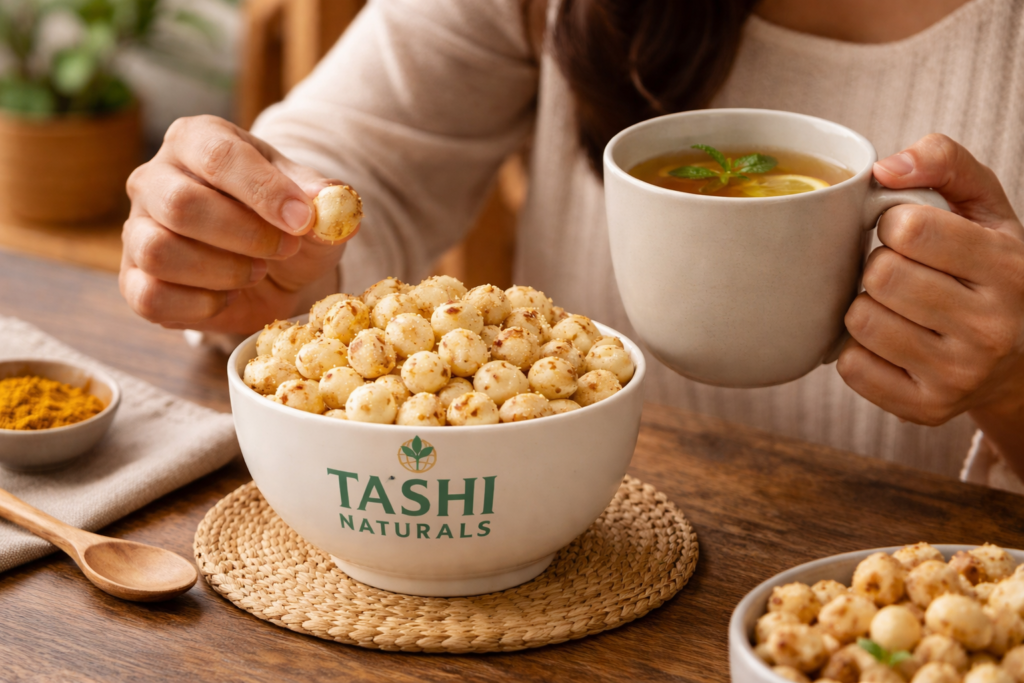
diabetic friendly snack makhana tea time

Managing diabetes isn’t just about avoiding sugar. It’s about making thoughtful food choices every single day.

From breakfast to dinner and especially in between meals, what you eat plays a huge role in keeping your blood sugar levels stable. And when it comes to snacking, the challenge becomes even bigger.

Most common snacks — biscuits, namkeen, chips — tend to cause sudden spikes in blood sugar. That’s where traditional foods like makhana (fox nuts) are getting attention again.

But the real question is:
Is makhana actually good for diabetics, or is it just another “healthy” label?

Let’s explore this in a simple, practical way so you can decide whether makhana deserves a place in your daily diet.

What Is Makhana?

Makhana, also known as fox nuts or lotus seeds, is a traditional Indian food that has been used for centuries.

It is mainly grown in the ponds of Bihar and has long been a part of:

  • Fasting meals
  • Ayurvedic diets
  • Everyday home cooking

Once harvested and processed, makhana becomes light, crunchy, and easy to cook or roast.

What makes makhana interesting for diabetics is its simple composition — it is natural, minimally processed, and free from refined ingredients.

Why Snacking Is Tricky for Diabetics?

Before we talk about makhana, it’s important to understand why snacks are often problematic for people with diabetes.

Most packaged snacks:

  • Are made from refined flour
  • Contain hidden sugars
  • Have high sodium and unhealthy fats
  • Digest quickly and spike blood sugar

This leads to:

  • Sudden glucose spikes
  • Energy crashes
  • Increased hunger

That’s why choosing the right snack is not just helpful — it’s necessary.

Is Makhana Good for Diabetics?

The short answer is: Yes, makhana can be a good snack for diabetics when eaten in the right way.

The reason lies in how it affects the body.

Key Benefits of Makhana for Diabetics

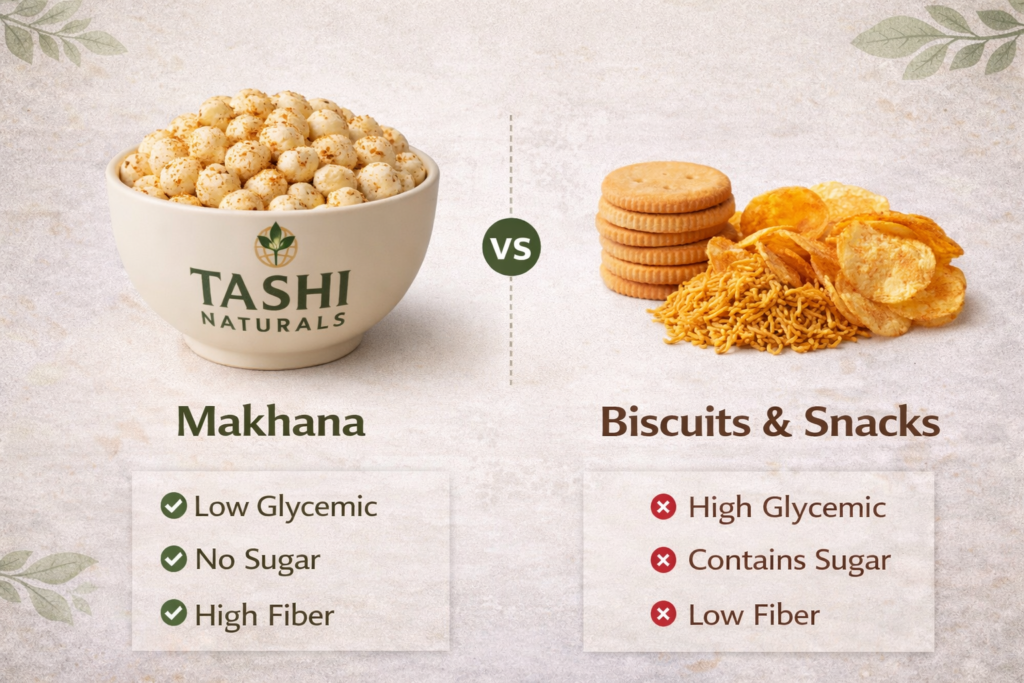
tashi naturals makhana vs biscuitssnacks

1. Low Glycemic Impact

Makhana is considered a low glycemic index (GI) food, which means it releases glucose slowly into the bloodstream.

This helps:

  • Prevent sudden sugar spikes
  • Maintain steady energy levels
  • Reduce insulin stress

For diabetics, this slow release is extremely important.

2. Naturally Low in Sugar

Unlike biscuits or sweets, makhana contains very little natural sugar.

It doesn’t overload the bloodstream with glucose, making it a safer option compared to most snacks.

3. Good Fiber Content

Fiber plays a crucial role in managing diabetes.

Makhana contains dietary fiber that:

  • Slows digestion
  • Improves satiety
  • Helps control blood sugar levels

This means you stay full longer and are less likely to overeat.

4. Light and Easy to Digest

One of the underrated benefits of makhana is how light it feels on the stomach.

Heavy snacks can make digestion sluggish, but makhana:

  • Is easy to digest
  • Doesn’t cause bloating
  • Works well even in the evening

This makes it suitable for all age groups, including elderly diabetics.

5. No Refined Ingredients

Makhana is a natural, whole food.

It doesn’t contain:

  • Refined flour
  • Artificial additives
  • Preservatives

 This simplicity is what makes it a reliable everyday snack.

When you eat makhana:

  • It digests slowly
  • Glucose enters the bloodstream gradually
  • Insulin response remains controlled

This is very different from high-carb snacks that digest quickly and cause spikes.

However, like any food, portion size still matters.

How Diabetics Should Eat Makhana (Important)

Even healthy foods can become unhealthy if eaten incorrectly.

Here are some simple guidelines.

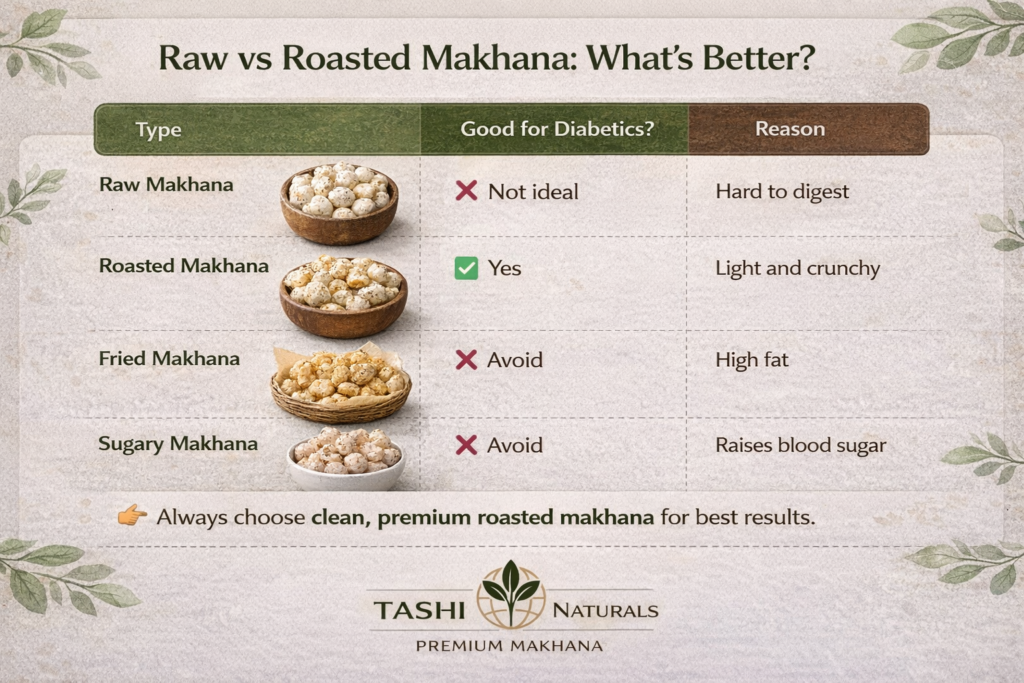
1. Always Eat Roasted, Not Fried

Dry roasting or light roasting in ghee is the best method.

Avoid:

  • Deep-fried makhana
  • Butter-heavy versions

2. Keep Portions Small

Stick to:
25–30 grams per serving

This is enough to satisfy hunger without overloading carbohydrates.

3. Avoid Sweet or Sugary Coatings

Flavored makhana coated with:

  • Sugar
  • Caramel
  • Chocolate

can increase blood sugar quickly.

Always choose:
Lightly salted or mildly spiced makhana

4. Pair It Smartly

For better blood sugar control, combine makhana with:

  • Nuts (like almonds)
  • Herbal tea
  • Protein-rich foods

This balances the glycemic response.

5. Eat at the Right Time

Best times to eat makhana:

  • Mid-morning snack
  • Evening snack

Avoid late-night overeating, even if the snack is healthy.

tashi naturals raw vs roasted makhana

Does Quality of Makhana Matter?

Yes, more than most people realize.

Low-quality makhana:

  • Absorbs more oil
  • Roasts unevenly
  • May feel chewy

High-quality makhana:

  • Roasts evenly
  • Stays light and crunchy
  • Requires less oil

This is why sourcing matters.

At Tashi Naturals, makhana is carefully sourced from Bihar to ensure clean, premium-quality fox nuts suitable for daily healthy consumption.

Can Makhana Help in Weight Management for Diabetics?

Many people with diabetes also struggle with weight management.

Makhana can help because:

  • It is low in fat
  • Keeps you full
  • Reduces unnecessary snacking

It works well as a healthy alternative to fried snacks, especially when you’re trying to follow a balanced diet.

Final Verdict: Is Makhana Safe for Diabetics?

Yes — makhana is a safe and healthy snack for diabetics when consumed in moderation.

It offers:
✔️ Low glycemic impact
✔️ Minimal sugar
✔️ Good fiber
✔️ Easy digestion

However, the key lies in:

  • Portion control
  • Proper roasting
  • Avoiding sugary versions

When eaten the right way, makhana can easily become part of a diabetes-friendly lifestyle.

Leave a Comment

Your email address will not be published. Required fields are marked *

Scroll to Top