
Makhana Calories Per 100g: Just How Low Is It Really?
If you’ve ever tried to eat a little healthier or lose some weight, you already know how confusing snack choices can be. One packet says “baked”, another says “low fat”, and somehow everything still feels loaded with calories.
That’s where makhana, also known as fox nuts or lotus seeds, quietly enters the picture.
You’ve probably heard people say things like “Makhana is very healthy” or “Have makhana instead of chips”. But let’s pause for a moment and ask the real question:
- How many calories does makhana actually have?
- And is it genuinely good for weight loss, or just another food trend?
Makhana Calories Per 100g (Raw)
Let’s start with the number everyone Googles first.
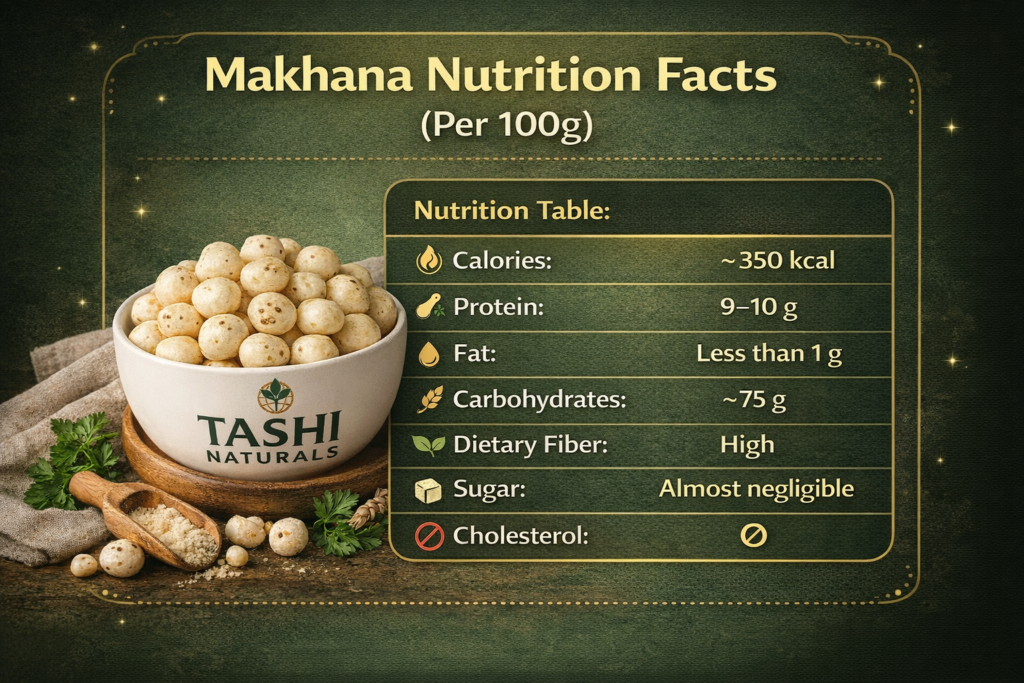
Here are the approximate nutrition values of raw makhana per 100 grams:
- Calories: ~350 kcal
- Protein: 9–10 g
- Fat: Less than 1 g
- Carbohydrates: ~75 g
- Dietary Fiber: High
- Sugar: Almost negligible
- Cholesterol: 0
At first glance, 350 calories per 100g doesn’t sound low at all. In fact, for many people, this is where doubt creeps in.
So does that mean makhana is not a low-calorie snack after all?
Not so fast.
Why “Calories Per 100g” Can Be Misleading
Here’s the thing most people miss:
You never eat 100 grams of makhana in one sitting.
Makhana is extremely light, airy, and voluminous. A bowl that looks full and satisfying may weigh far less than you think.
In real life:
- A normal serving size of makhana is around 25–30 grams
- That’s already enough to feel full and snack-satisfied
What does that mean practically?
- 25–30g roasted makhana = approx. 90–110 calories
- That’s it
Why Makhana Is Considered a Low-Calorie Snack in Real Life
Despite the per-100g number, makhana earns its reputation as a low-calorie snack for very practical reasons:
1. It Keeps You Full for Longer
Makhana contains a good amount of dietary fiber. Fiber slows digestion, which means:
- Fewer hunger pangs
- Less mindless snacking later
2. It’s Naturally Very Low in Fat
Raw makhana contains less than 1 gram of fat per 100g. Even after roasting with a small amount of oil or ghee, the fat content stays controlled.
3. No Empty Calories
Unlike biscuits or namkeen, makhana doesn’t rely on refined flour, sugar, or additives. Every calorie serves a purpose.
4. Portion Control Is Easy
You physically feel full before overeating makhana. That’s rare in snack foods.
All of this makes makhana especially helpful if your goal is weight management, not just calorie counting.
Roasted Makhana Calories: What You Actually Eat
Most of us eat makhana roasted, not raw.
When lightly roasted using:
- 1 teaspoon oil or ghee
- Simple spices like haldi, pepper, or jeera
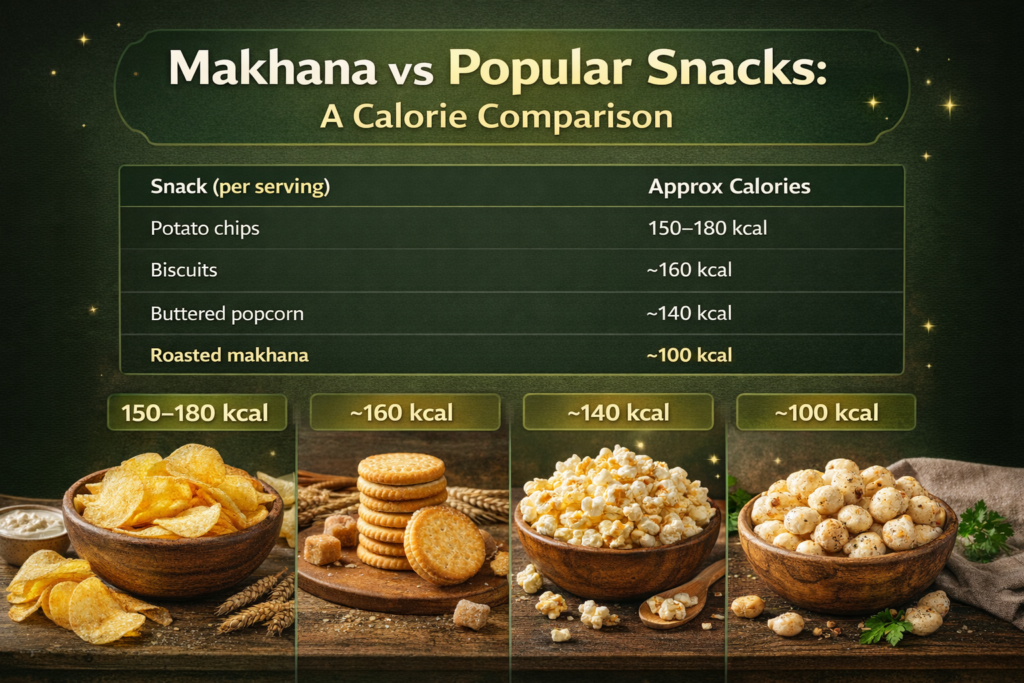
- 90–110 calories
Now compare that with common snacks people reach for without thinking twice.
Makhana Nutrition Facts: More Than Just Calories
Not only does makhana have fewer calories, it also:
- Has no refined sugar
- Contains fiber and protein
- Doesn’t spike blood sugar the way biscuits do
That’s why nutritionists often recommend it as one of the best low calorie Indian snacks.
Calories aside, makhana brings some solid nutrition to the table:
- Plant-based protein for satiety
- Magnesium & potassium for heart health
- Low glycaemic load, suitable for diabetics
- Naturally gluten-free
- Zero cholesterol
This is what makes makhana different from snacks that are technically “low calorie” but nutritionally empty.
Does the Quality of Makhana Matter?
Absolutely. And this is something most blogs skip.
- Low-quality makhana:
- Absorbs excess oil while roasting
- Roasts unevenly
- Turns chewy instead of crisp
- Ends up adding unnecessary calories
High-quality makhana, especially sourced from Bihar, behaves very differently:
- Roasts evenly
- Needs less oil
- Stays light and crunchy
- Tastes naturally better
If you’re buying makhana for health reasons, quality isn’t optional. It directly affects both calories and taste.
- You can explore [premium raw makhana] sourced carefully for clean roasting and better nutrition.
Is Makhana Good for Weight Loss?

In simple words: yes, when eaten the right way.
Makhana works well for weight loss because:
- It allows you to snack without guilt
- It prevents overeating later
- It replaces calorie-dense junk foods easily
Best time to eat makhana:
- Mid-morning hunger
- Evening tea-time
- Late-night cravings
Just remember:
- Roast lightly
- Avoid heavy butter or sugary coatings
- Keep portions sensible
So, What’s the Final Verdict?
If you look only at makhana calories per 100g, it might not immediately scream “diet food”.
But once you look at:
- Real portion sizes
- Satiety
- Nutritional value
- Comparison with everyday snacks
It becomes clear that makhana is one of the smartest snack choices you can make.
For anyone trying to eat cleaner, manage weight, or simply switch to healthier Indian snacks, makhana fits in effortlessly.
And when you choose premium-quality makhana, lightly roasted at home, you get the best of both worlds: taste and nutrition.
Great perspective. Calories alone don’t tell the full story. Snacks like makhana work well because they are light yet satisfying, helping people snack without overconsuming oils and empty calories. That balance of taste, nutrition, and satiety is what makes makhana a great everyday snack.
Thank you Brij for reading our blog and taking the time to comment. We’re glad you visited Tashi Naturals and hope you continue enjoying our healthy makhana range and content!
Have you tried any of our makhana flavours yet?