
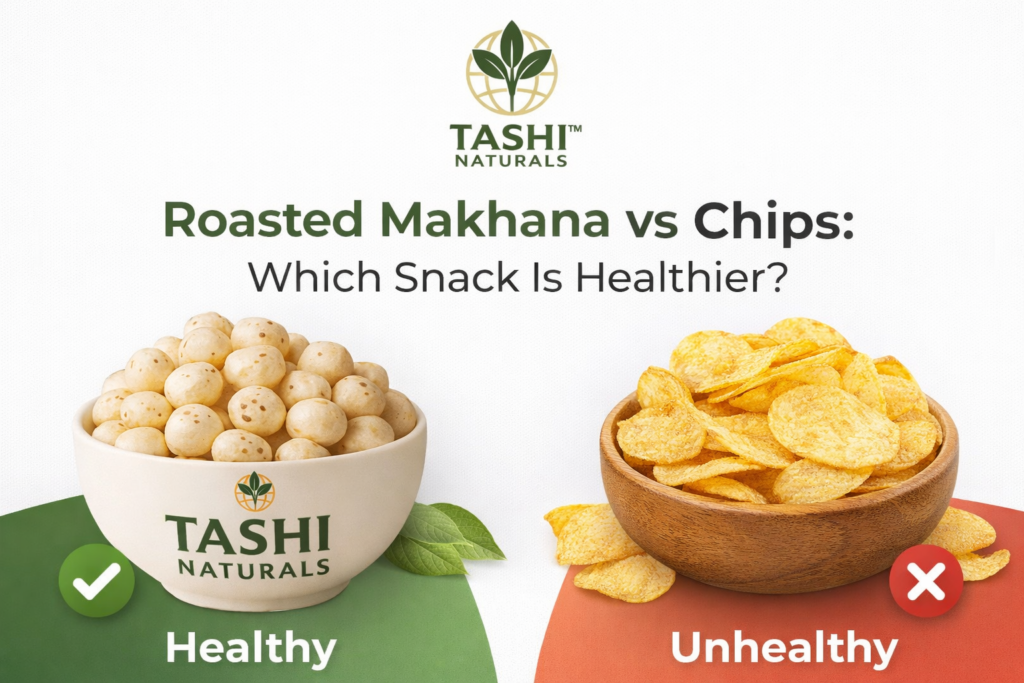
Roasted Makhana vs Chips: Which Snack Is Actually Healthier?
Snacking is a part of everyday life. Whether it’s during evening tea, while watching a movie, or simply when hunger strikes between meals, most of us reach for something crunchy.
For years, potato chips have been the go-to snack. They’re salty, crispy, and easily available everywhere. But in recent years, another snack has quietly been gaining popularity across India and globally: roasted makhana, also known as fox nuts or lotus seeds.
Health experts, fitness enthusiasts, and even nutritionists often recommend makhana as a healthier alternative to fried snacks. But is it really better than chips?
In this article, we’ll explore roasted makhana vs chips in terms of calories, nutrition, digestion, and overall health impact so you can make a smarter choice for everyday snacking.
What Is Roasted Makhana?
Before diving into the comparison, let’s understand what makhana actually is.
Makhana, also called fox nuts or lotus seeds, comes from the seeds of the lotus plant and is primarily grown in the wetlands of Bihar, India, which produces most of the world’s supply.
These seeds are harvested, popped, and then roasted to create the light and crunchy snack we know today.
Roasted makhana has been used in Indian households for centuries, especially during fasting, traditional cooking, and healthy snacking.
Unlike many packaged snacks, makhana is naturally light, low in fat, and rich in nutrients, which is why it’s gaining popularity as a modern healthy snack.
Roasted Makhana vs Chips: Nutritional Comparison
Let’s look at how roasted makhana compares with chips when it comes to nutrition.
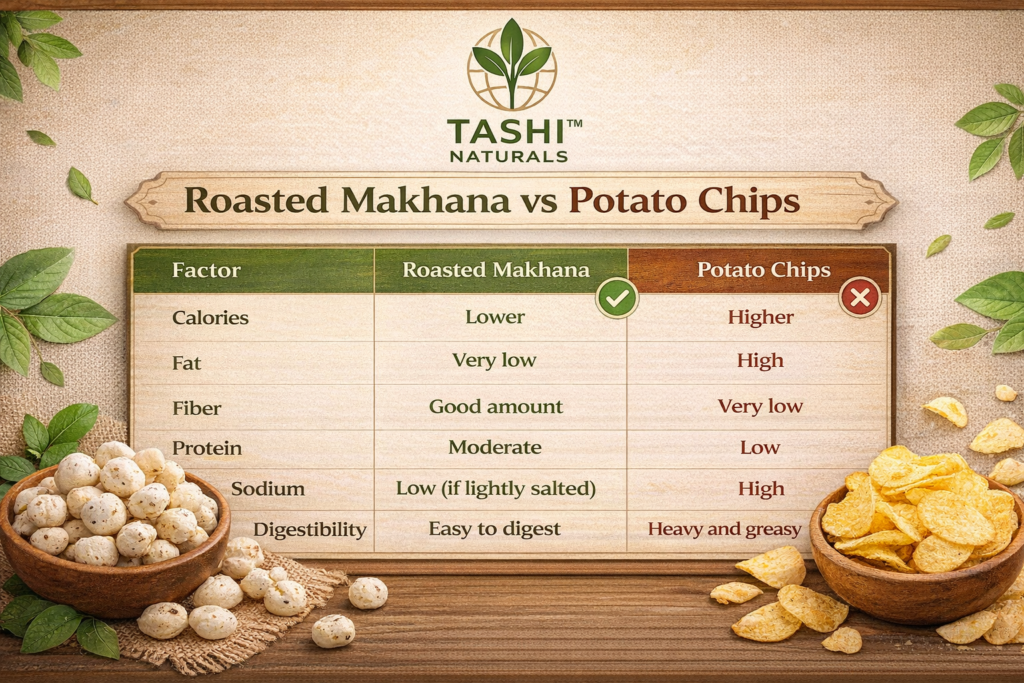
A typical serving of roasted makhana (around 25–30 grams) contains about 100–110 calories, while a similar portion of potato chips can easily reach 150–180 calories or more.
But calories are only part of the story. The type of calories and the nutritional value behind them matter even more.
Why Chips Can Be Harmful When Eaten Frequently?
Potato chips may taste delicious, but they often come with several downsides when consumed regularly.
1. Deep-Fried in Refined Oil
Most commercial chips are deep fried in refined vegetable oils, which significantly increases their fat content. Frequent consumption of deep-fried foods is associated with higher cholesterol levels and increased risk of lifestyle diseases.
2. High Sodium Levels
Chips are usually loaded with salt and flavor enhancers. High sodium intake can contribute to:
- Water retention
- High blood pressure
- Increased thirst and cravings
Over time, excess salt consumption can affect heart health.
3. Empty Calories
Chips provide calories but very little nutritional value. They lack essential nutrients such as fiber, vitamins, and protein.
That’s why after eating chips, people often still feel hungry soon afterward.
4. Triggers Overeating
Chips are designed to be addictive. The combination of salt, fat, and crunch makes it easy to keep eating far beyond the intended serving size.
This often leads to consuming far more calories than planned.
Why Roasted Makhana Is Considered a Healthier Snack?
Roasted makhana stands out because it offers both taste and nutrition without the heaviness of fried snacks.
1. Naturally Low in Fat
One of the biggest advantages of makhana is its very low fat content. Even when roasted with a small amount of oil or ghee, it remains significantly lighter than fried snacks.
This makes it suitable for people who are trying to manage weight or reduce fat intake.
2. Rich in Fiber
Makhana contains dietary fiber, which helps support digestion and keeps you feeling full for longer.
Fiber also helps slow down digestion, preventing sudden spikes in hunger.
3. Good Source of Plant Protein
Although not extremely high in protein, makhana still provides more protein than many common snack foods, making it a more balanced option.
Protein plays an important role in muscle repair, metabolism, and overall body function.
4. Easy to Digest
Unlike greasy snacks that can feel heavy, roasted makhana is light and easy on the stomach. This is why it’s often recommended for children, elderly individuals, and even people with sensitive digestion.
5. Naturally Cholesterol-Free
Makhana contains no cholesterol, which makes it a heart-friendly snack when prepared with minimal oil.
Taste vs Health: Can Healthy Snacks Still Be Enjoyable?
A common myth about healthy snacks is that they’re boring. But that’s far from true when it comes to makhana.
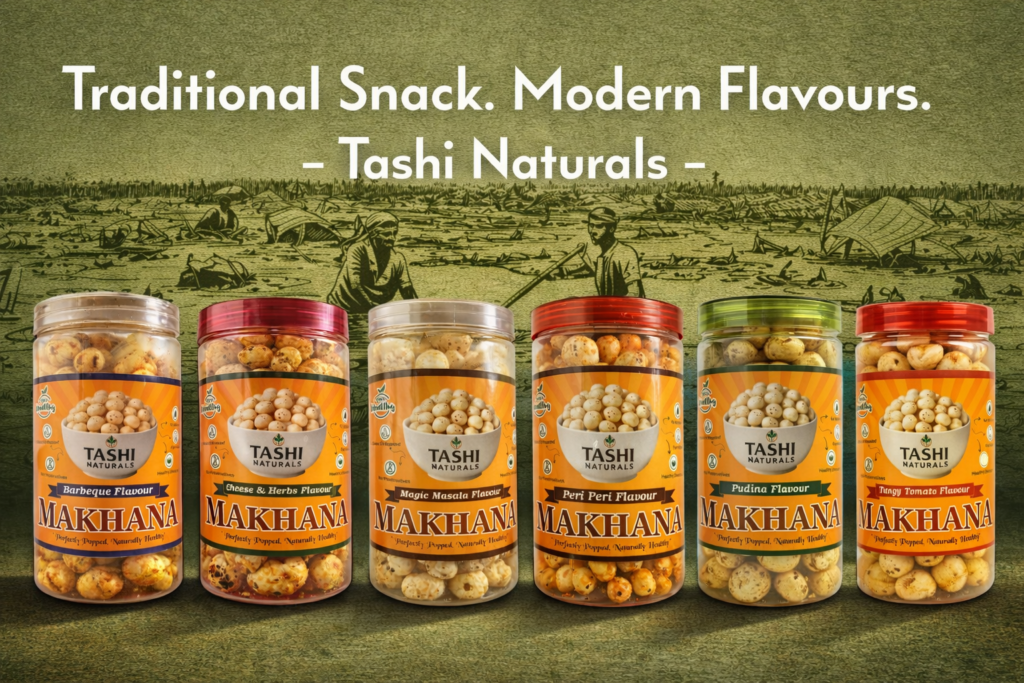
Roasted makhana can be flavored in many delicious ways, such as:
- Barbeque Flavor
- Cheese & Herbs Flavor
- Peri-peri Flavor
- Pudina (mint) Flavor
- Tangy Tomato Flavor
- Magic Masala Flavor
These flavors make makhana just as satisfying as chips, but without the heaviness or guilt afterward.
Many people who switch to makhana find that it satisfies their craving for something crunchy while also helping them maintain a healthier lifestyle.
If you enjoy experimenting with flavors, you can also explore different varieties of roasted makhana snacks available online.
Makhana for Everyday Snacking
One of the biggest advantages of makhana is that it fits easily into daily routines.
It works well as:
- An evening tea-time snack
- A midday hunger fix at work
- A healthy snack for kids
- A light option for late-night cravings
Because makhana is filling yet light, it helps prevent overeating during meals.
People trying to maintain a balanced diet often include makhana as a regular weight loss snack, especially when replacing fried foods.
Does Quality Matter When Buying Makhana?
Yes, quality makes a big difference.
High-quality makhana usually comes from Bihar, where ideal growing conditions produce larger, puffier seeds.
Premium makhana tends to:
- Roast more evenly
- Stay crunchy longer
- Require less oil during roasting
- Taste cleaner and fresher
Choosing premium raw makhana can make a noticeable difference in both taste and nutrition.
Final Verdict: Roasted Makhana vs Chips
When comparing roasted makhana vs chips, the difference becomes quite clear.
While chips may offer instant taste satisfaction, they often come with high fat, high sodium, and empty calories.
Roasted makhana, on the other hand, provides a snack that is:
- Light
- Nutritious
- Easy to digest
- Naturally low in fat
If you’re someone who snacks frequently, switching to makhana can be a simple yet powerful step toward healthier eating.
You still get the satisfying crunch, but with far fewer downsides.
In the long run, making small changes like replacing fried snacks with healthier alternatives can have a big impact on overall health and wellbeing.
Great comparison. The biggest shift we are seeing today is consumers moving from taste-only snacking to mindful snacking. Roasted makhana offers that rare combination of crunch, nutrition, and lightness, making it a great alternative to traditional fried snacks. Small swaps like this can truly improve everyday eating habits.
Thank you Brij for reading our blog and taking the time to comment. We’re glad you visited Tashi Naturals and hope you continue enjoying our healthy makhana range and content!
Have you tried any of our makhana flavours yet?
Great comparison. The biggest shift we are seeing today is consumers moving from taste-only snacking to mindful snacking. Roasted makhana offers that rare combination of crunch, nutrition, and lightness, making it a great alternative to traditional fried snacks. Small swaps like this can truly improve everyday eating habits.
Thank you Mohan for reading our blog and taking the time to comment. We’re glad you visited Tashi Naturals and hope you continue enjoying our healthy makhana range and content!
Have you tried any of our makhana flavours yet?